In the world of racing games, two titans stand tall: Gran Turismo and Forza. It’s like a high-speed showdown between classic elegance and modern flair. Gran Turismo boasts a legacy that’s as rich as a fine wine, while Forza revs up the excitement with its flashy graphics and dynamic gameplay. Which one deserves the crown?
Picture this: you’re gripping the controller, heart racing as you navigate tight corners and unleash nitrous. Both games promise adrenaline-pumping action, but they cater to different tastes. Whether you’re a gearhead who loves realism or a casual racer looking for fun, the rivalry between these two franchises offers something for everyone. Buckle up as we dive into the nitty-gritty of Gran Turismo vs Forza and find out which game will make you feel like a true racing champion.
Overview of Gran Turismo
Gran Turismo, a flagship racing franchise, showcases a blend of realism and precision. Renowned for its dedication to providing an authentic driving experience, it stands as a hallmark in the racing genre.
History and Evolution
Gran Turismo debuted in 1997 on the PlayStation platform. Within its initial release, the game featured 140 cars and 11 tracks, setting a new standard for simulation racing. Over the years, the franchise evolved, introducing advanced graphics and improved physics engines. Each sequel brought enhancements, with Gran Turismo 4 offering over 700 cars and 50 tracks. In 2017, Gran Turismo Sport embraced online competition, emphasizing eSports and community engagement. This evolution reflects the series’ commitment to blending traditional elements with modern gaming trends.
Gameplay Mechanics
Gameplay mechanics in Gran Turismo focus on realism and precision driving. Players enjoy a wide variety of vehicles, each with distinct handling characteristics. The game incorporates tire wear, fuel consumption, and weather conditions, adding depth to the racing experience. Players engage in time trials, championships, and online races, honing their skills and competing against others. Customization options allow for tuning vehicles to match individual driving styles. Challenges arise from AI opponents, providing a stimulating test of strategy and skill while racing on diverse tracks worldwide.
Overview of Forza
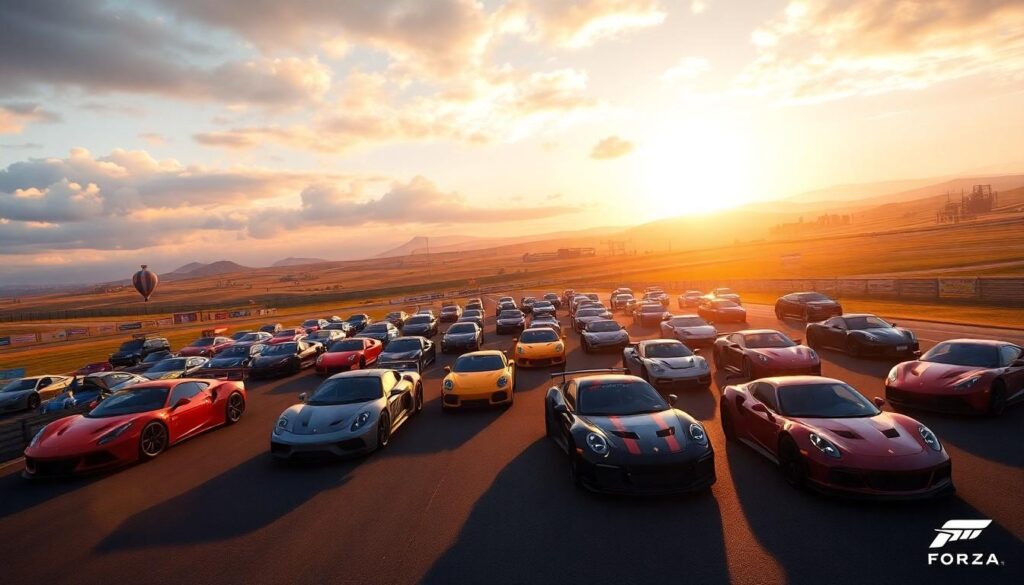
Forza is a highly regarded racing franchise known for its stunning graphics and immersive gameplay experience. Players enjoy a blend of accessibility and realism, appealing to both arcade fans and simulation enthusiasts alike.
History and Evolution
The Forza franchise began with Forza Motorsport in 2005, establishing a formidable presence in the racing game genre. Each subsequent release enhanced realism and graphical fidelity, with Forza Motorsport 7 including more than 700 cars and over 30 tracks. The introduction of Forza Horizon in 2012 added an open-world element, allowing players to explore vast environments and engage in various racing events. As of 2023, the Forza series has adapted to new gaming technologies, such as cloud gaming and cross-platform play, ensuring its relevance in a rapidly evolving industry.
Gameplay Mechanics
Forza features a unique blend of gameplay mechanics that enhance player engagement. Players can experience a wide array of vehicles, each offering distinct handling and performance traits. Customization options allow for tuning vehicles to match individual preferences, from adjusting tire pressure to upgrading engine parts. Additionally, dynamic weather and day-night cycles affect racing conditions, providing players with varied racing experiences. Online multiplayer modes encourage competitive play, while a single-player career mode offers a structured progression system that keeps players invested in the game.
Comparison of Graphics and Realism
Gran Turismo and Forza both showcase impressive graphics and realism, yet they adopt different approaches. Each franchise emphasizes distinct aspects, appealing to various player preferences.
Visual Fidelity
Gran Turismo prioritizes visual accuracy, pushing boundaries with stunning car models and matte textures. Each vehicle undergoes meticulous detailing, presenting realistic reflections and lighting that enhance its appearance. In contrast, Forza incorporates vibrant colors and dynamic effects, creating an immersive racing experience. The graphical fidelity shines in both franchises; however, Gran Turismo excels in realism while Forza embraces stylistic enhancements. In Forza Motorsport 7, the inclusion of over 700 cars and expansive tracks elevates visual representation, matching varying player expectations. Ultimately, both games offer visual spectacles reflective of their unique philosophies.
Environmental Detail
Gran Turismo emphasizes realistic track layouts and environmental interactions. Real-world racing circuits receive accurate reproductions, ensuring that players feel the challenges of each course. Moreover, dynamic weather systems enhance the racing experience, raising the stakes in every race. Forza, meanwhile, features expansive open-world environments filled with detailed landscapes and seasonal dynamics. Each race takes place against visually engaging backdrops, enriching player immersion. The diversity in environments manifests in varied racing experiences, catering to distinct gameplay preferences. Both franchises capture the essence of racing realism through environmental presentation, pleasing dedicated racing fans.
Community and Multiplayer Aspects
Both Gran Turismo and Forza emphasize community and multiplayer experiences, offering unique online features and vibrant player communities.
Online Features
Gran Turismo’s online infrastructure allows racers to compete in structured events and championships. Players can join lobbies for casual races or participate in sanctioned competitions, enhancing competitive spirit. In Gran Turismo Sport, an emphasis on eSports draws attention, showcasing high-level racing for serious players. This franchise’s integration of ranked matches fosters skill-based progression. Forza, on the other hand, provides extensive online features through its Horizon and Motorsport titles. Custom leagues and seasonal events offer diverse gameplay options. Cross-platform play allows Xbox and PC players to race against one another, broadening the player base. Both franchises include leaderboards for tracking progress, yet the focus on community engagement distinguishes their online experiences.
Player Communities
Gran Turismo has cultivated a dedicated player community known for its commitment to realism and precision. Players frequently share tips on car tuning and driving techniques. Online forums teem with discussions about race strategies and event participation. Forza communities thrive on shared experiences and creativity. Players showcase custom cars and engage in open-world exploration, often participating in community-driven events. Social media groups and platforms play a significant role in fostering interactions among fans. While Gran Turismo players often prioritize competition, Forza players typically enjoy celebrating creativity and exploration. Each franchise’s community reflects its unique gameplay focus, influencing player relationships and shared experiences.
Performance and Customization Options
Gran Turismo and Forza offer extensive performance and customization options, catering to different player preferences and enhancing the overall racing experience.
Vehicle Customization
Gran Turismo features intricate vehicle customization possibilities, allowing players to personalize their cars extensively. A wide variety of cosmetic upgrades, including body kits, paint jobs, and decals, enhances the visual appeal. Engine modifications, suspension upgrades, and tire selections are also available, promoting tailored racing styles. Each vehicle hosts unique characteristics, which players can enhance or alter to improve performance. Forza, on the other hand, emphasizes both aesthetics and functionality, encouraging creativity with unique designs and vibrant visual elements. Customization tools in Forza promote user-generated content, where players can share designs and upgrades with the community.
Tuning and Upgrades
Tuning in Gran Turismo requires players to adjust settings like suspension stiffness, gear ratios, and brake balance for optimal performance. These tuning options provide precise control over vehicle dynamics, enabling racers to adapt to various tracks and conditions. Upgrades include performance-enhancing parts that boost speed and handling, allowing players to develop their vehicles strategically. Forza offers a parallel experience, featuring a straightforward tuning interface that provides options for similar adjustments. Upgrades in Forza generally enhance acceleration, top speed, and handling traits, making a substantial difference on the track. With both franchises prioritizing tuning and upgrades, players enjoy a tailored racing experience that meets their personal challenges and driving preferences.
Conclusion
The rivalry between Gran Turismo and Forza showcases two distinct approaches to racing games. Gran Turismo’s commitment to realism and precision appeals to those seeking a true-to-life driving experience. Meanwhile, Forza’s vibrant graphics and open-world exploration attract players looking for a more casual and immersive adventure.
Ultimately, the choice between these two franchises boils down to personal preference. Whether one values the classic elegance of Gran Turismo or the dynamic excitement of Forza, both games offer unique experiences that cater to a wide range of racing enthusiasts. As technology continues to evolve, both franchises are likely to adapt and innovate, ensuring their places at the forefront of the racing genre for years to come.